

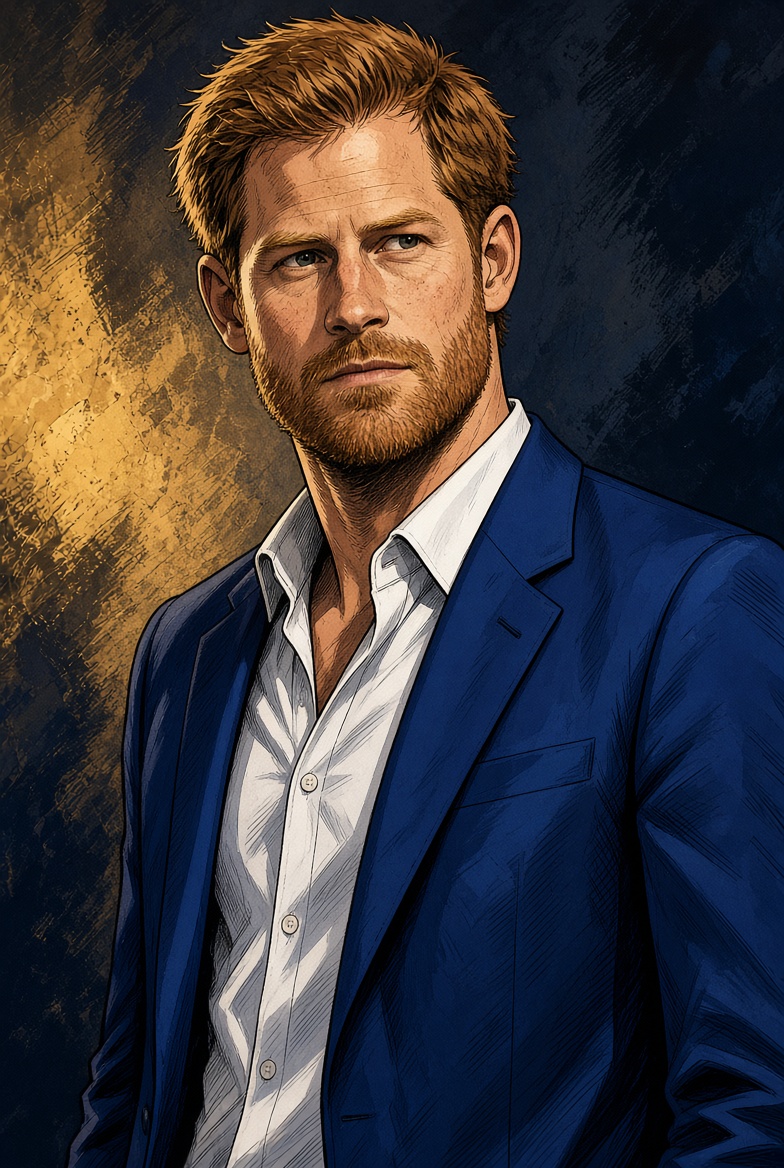
London, late summer 2026. The rumors aren’t just seeping out—they are trickling. At first quietly, then unstoppably. Prince Harry is reportedly making a film about his mother. *His* film. About Princess Diana. For the thirtieth anniversary of her death.
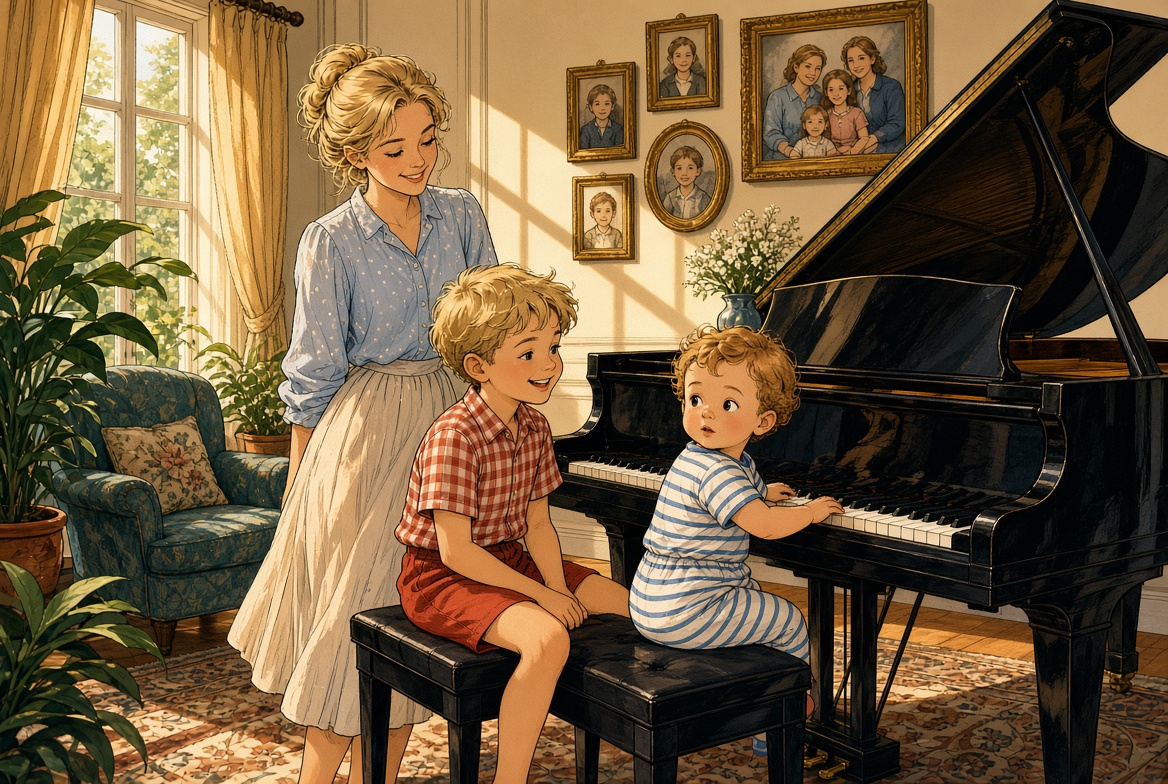 Here, the piano scene becomes a quiet family icon—less of a snapshot,
more of a tableau. The light is softer,
the faces are more clearly defined, and the sense
of closeness appears deliberately composed.
Not as a guest, not as a wistful son in the background. As narrator. As producer. As someone finally taking charge of how the world sees her.
After years of Californian exile, after the book that tore the family apart, after lost lawsuits and a paranoia he himself labeled as such—the younger brother is back. And this time, he doesn’t want to flee. He wants to speak.
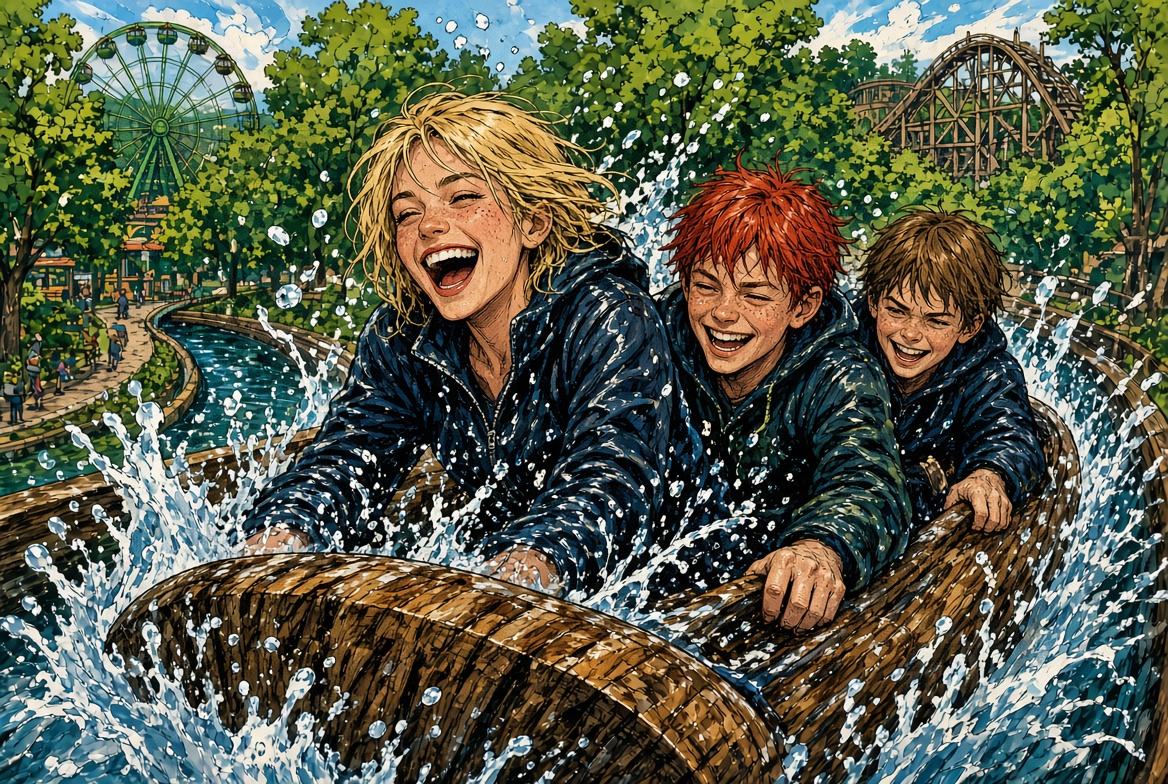 The amusement ride transforms into a small explosion of wetness and laughter.
The lines are sharper, the water more graphic—joy as movement, not documentation.
His mother’s death has never left Harry. 1997, a tunnel in Paris, camera flashes, a shattered life. He was twelve. Ever since, he has carried that same rift within him: anger at the paparazzi, distrust of the Palace, the constant fear that history would repeat itself with his own family. He laid this all out before in *Spare*—the pain, the feeling of being merely the “spare,” the shadow Diana left behind that no one really wanted to catch.
Back then, it was a book. Now, it is to become a film.
The US brought him no peace. Lawsuits regarding police protection and media surveillance ended in defeat. The rift with William deepened. Everything he tried to regain control seemed to drive him further onto the defensive. Hence the change in strategy: out of retreat, into confrontation. And not just anywhere—in Britain. Centered on the most sacred subject the family knows.
Friends and associates of Diana have reportedly already been approached. Old voices—people who knew her before the Crown and the cameras devoured everything. The timing is no coincidence: 2027 marks the thirtieth anniversary of her death. The whole country will be watching again. Harry wants to be the one to tell the story.
That is precisely what makes the endeavor so dangerous.
For Diana was not just Harry’s mother; she was William’s, too. And William—or so the word goes behind palace walls—views this solo move as a grab for their shared legacy. A grab for the emotional capital that both sons ought to share. A grab for the image of that warm, spirited, hounded woman—an image Harry now seeks to shape on his own terms.
Then there is the immediate accusation of hypocrisy. For years, Harry demanded privacy, railed against the media, and portrayed himself as a victim of the very same hunt that drove his mother to her death. And now? A film. Cameras. Interviews. A self-orchestrated display of pain. He is doing exactly what he once condemned in others—only this time, he holds the reins.
Perhaps that is precisely the point.
Perhaps the film is not another attack, but an attempt to bring things full circle. A way to channel the anger, fear, and bitterness—not through interviews or courtrooms, but through a story that is truly his own. A decisive act of liberation that bypasses squabbles between brothers or debates over police protection, striking instead straight at the heart of the family: through Diana.
Whether he pulls it off is one question; what remains in the aftermath is another.
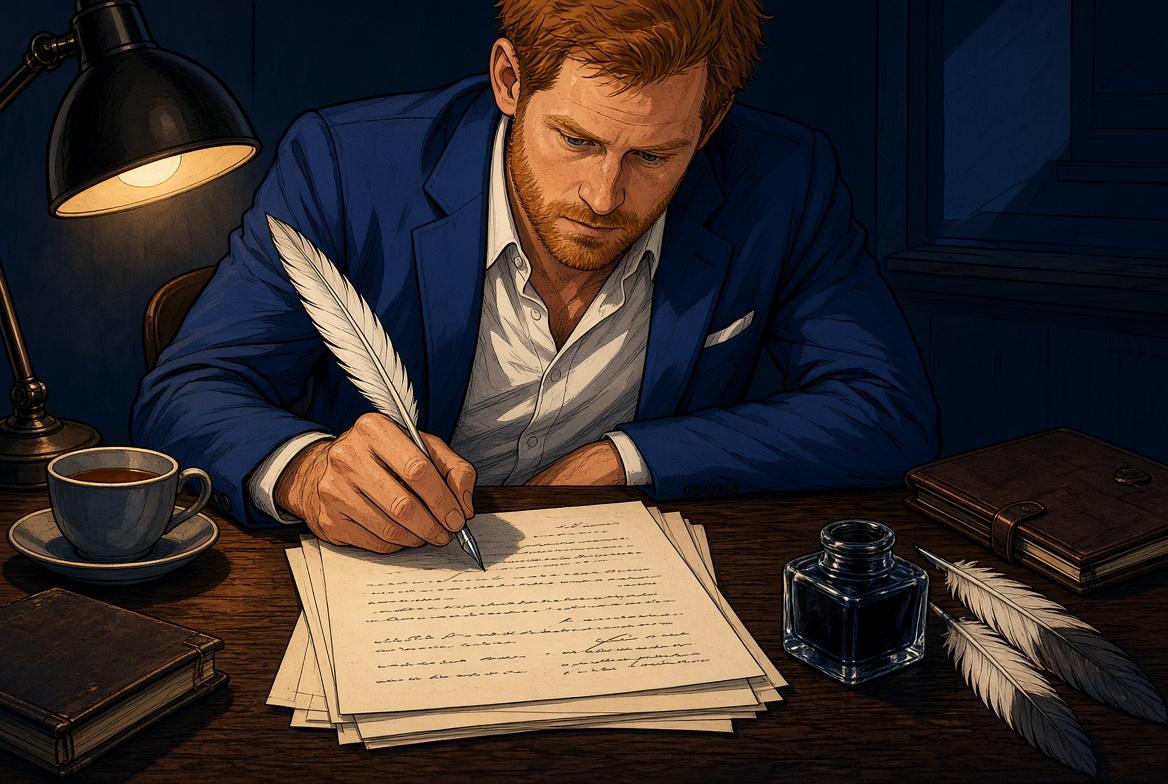
If this film actually comes to pass, it will be more than just a documentary; it will be an incendiary device. Insiders are already whispering about a second, secret cut: Harry doesn’t just want to reminisce—he wants to settle scores. Old letters. Unpublished footage. His mother’s voice accusing the Palace, while the camera zooms in on William’s face. Some go even further: the rumor is that on August 31, 2027—exactly thirty years after Paris—the film will not simply end on television, but conclude with a live address delivered at her grave in Althorp. Harry, alone before the world’s cameras, demands a public apology from the Crown—to Diana, to himself, and to his children. It is a gesture so theatrical, so final, that it tears the country into two irreconcilable camps: those who see him as the “People’s Princess’s” last true son, and those who view him as the man who opened his mother’s grave to shake the foundations of the throne. In the aftermath—according to the most extreme scenario—there are no longer any brothers. Only two kingdoms within one.

chicki chicki prominent – AI gen article and images
Fictional story; nothing has to correspond to the truth.




Leave a Reply