

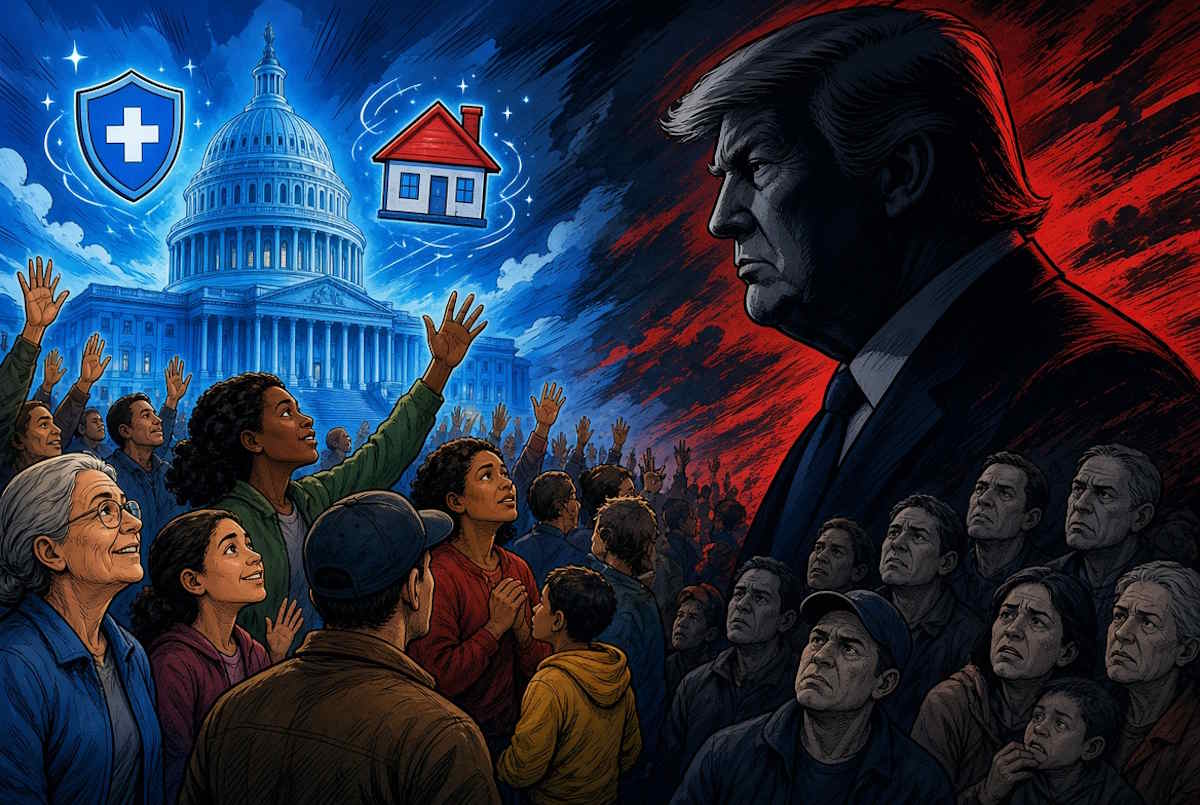
Will America become more socially oriented—or will this remain merely a symbolic corrective?
The 2026 midterm elections have left behind a clear, if somewhat ambivalent, political landscape. The Democrats have captured both chambers of Congress—achieving a historic surge that reached deep into “red” strongholds such as Texas, Kansas, Ohio, South Carolina, and Iowa. James Talarico won in Texas, Adam Hamilton broke a 94-year-old Republican winning streak in Kansas, and Sherrod Brown reclaimed Ohio for the Democrats. At the same time, both progressive and moderate candidates emerged victorious. Voters delivered a clear rejection of Trump and his agenda. The focus was not on the “culture war” rhetoric of recent years, but rather on the stark realities of daily life: rising prices, high fuel costs, the tangible consequences of policies regarding the war in Iran and trade tariffs, and a growing sense that everyday life has become more expensive and less secure.
Exit polls indicate that the economy and the cost of living were the dominant issues. A large segment of the electorate held Trump’s policies responsible for this deterioration and, when it comes to the economy, placed more trust in the Democrats than in the Republicans. Those who felt worse off than they had been two years ago were significantly more likely to vote for the Democrats. This sets the stage for the question of whether the U.S. is now moving toward a more “socially oriented” approach. In the European sense—meaning stronger social safety nets, more affordable healthcare, and concrete relief regarding housing and daily living expenses—the answer is a cautious “partially, yes,” though structurally, it remains limited. The new Democratic majority can advance legislation aimed at affordability: price caps on prescription drugs, the expansion of Medicaid in individual states, investments in affordable housing, and targeted financial relief for low- and middle-income households. The victories of more progressive candidates, combined with widespread dissatisfaction regarding costs, have intensified the pressure not merely to act as an opposition, but to provide concrete social solutions. At the same time, Donald Trump remains president; no major social legislation can pass without his signature. The Democrats can engage in obstruction, conduct investigations, pursue symbolic initiatives, and take independent action at the state level—where they have secured several governorships and legislative seats. Consequently, a fundamental shift toward a European-style social welfare state is not to be expected.
Instead, what is emerging is a corrective push rooted in economic populism: less ideology, more everyday solidarity. The national mood is irritable, focused on material concerns, and impatient. Those who ignore this will lose—a point the voters made unmistakably clear on Tuesday. Whether this will evolve into a lasting, more socially-oriented policy depends on whether the new majorities can deliver results or whether they become mired in gridlock. The moment for action has arrived; the window of opportunity to seize it is brief.
 chicki.icu – hot or not?
SI gen post













Leave a Reply