

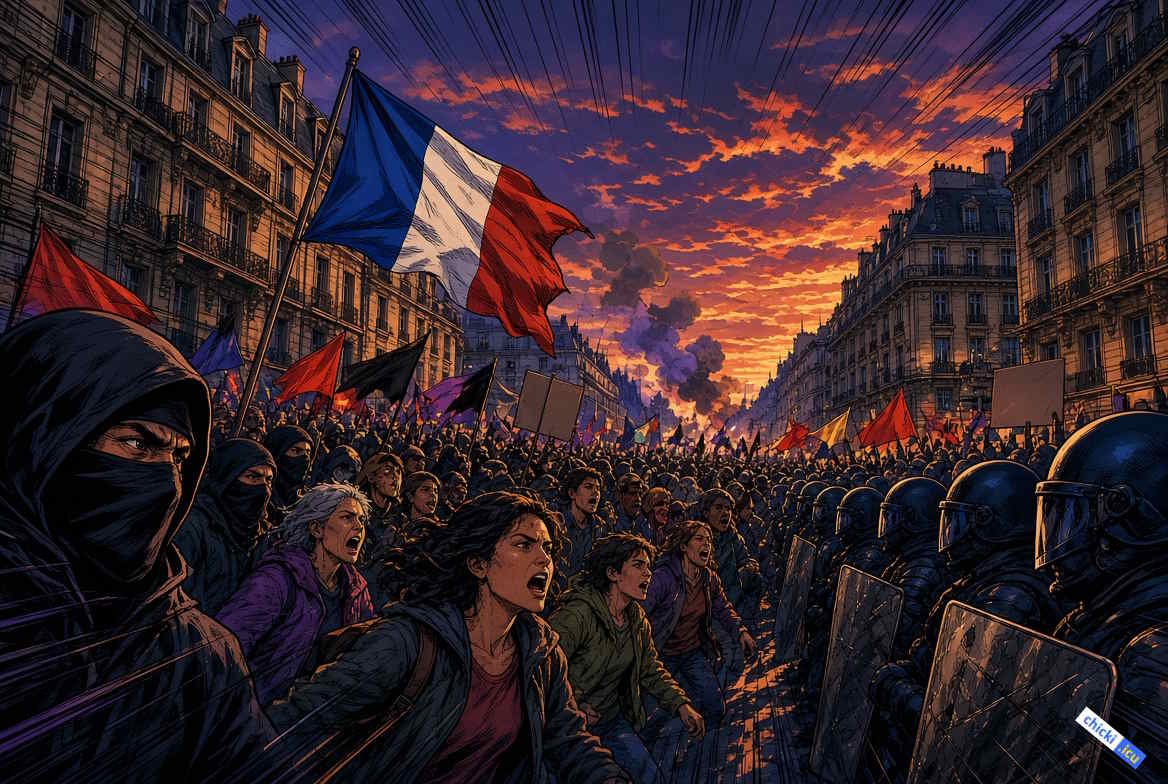
A Day of Mass Mobilisation and Sudden Violence
What began weeks earlier as school blockades in the poorer northern suburbs of Paris over absent teachers, overcrowded classrooms and decaying buildings escalated on 17 October into one of the largest and most disorderly protest days France has experienced in recent years. Across cities and towns, hundreds of thousands of people took to the streets to express frustration with rising prices, stagnant wages and the state of public services. By the end of the day, Prime Minister Sébastien Lecornu reported roughly 1,200 arrests and about 150 injured police officers.
Estimates of the turnout varied sharply, as is common in French demonstrations. Interior Minister Laurent Nuñez put the national figure at around 550,000, including some 110,000 in Paris across approximately 110 separate marches. Organisers from the CGT trade union and the student union Union étudiante claimed closer to 800,000. The government did not dispute that the mobilisation was substantial.
The great majority of participants marched peacefully behind banners, chanted and dispersed. On the edges of many processions, however, masked groups confronted police, smashed shop windows, looted stores and set vehicles and buildings alight. Officers responded with tear gas; in Paris a water cannon was also deployed. Visiting injured colleagues in the capital late in the evening, Lecornu described it as “a miracle” that the human cost had not been greater. The detention tally rose quickly from around 400 early reports to the higher figure given by the prime minister. Nuñez attributed much of the disorder to organised radical-left elements and opportunistic criminals who exploited the crowds to raid shops. President Emmanuel Macron stated there was “no room for violence” and pledged prosecutions for those who attacked prefectures, businesses and town halls.
One injury has already become emblematic. In Saint-Étienne a 17-year-old lost a hand during confrontations near a shopping centre; local officials and several media outlets linked the wound to a police crowd-control grenade. The teenager was taken to the city’s university hospital. The case is expected to revive long-standing arguments about the munitions French police use against demonstrators, last intensely debated during the yellow-vest era.
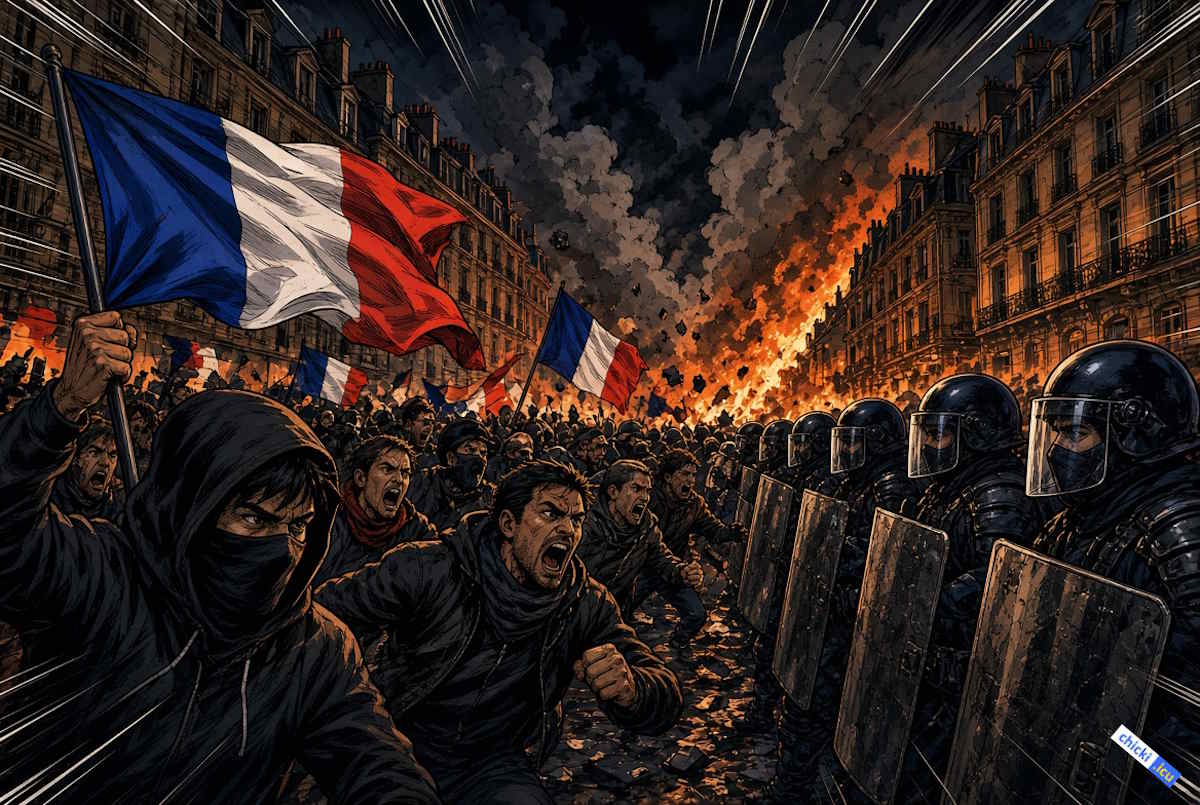
From School Gates to a Broad Coalition of Grievances
Saturday’s distinctive feature was the breadth of the coalition rather than any single trigger. High-school pupils in the northern Paris suburbs had begun blockading schools the previous month; images of police pushing teenagers back from school gates circulated widely online and the protests spread. Former yellow-vest participants, who first mobilised in 2018 over fuel taxes, returned over the cost of living. Trade unions pressed for better wages and pensions. Climate campaigners, university students and farmers added their own demands. In Paris organisers staged two separate routes leaving Place de la République: students headed toward Place de la Nation while yellow vests and unions marched toward Place de Clichy. The union procession remained largely calm; around République black-clad groups traded fireworks and projectiles with police.
People interviewed on the streets spoke of a widening gap between rising everyday expenses and deteriorating services. A 19-year-old in Paris told reporters she was marching because living costs and fuel prices had become unbearable and students were being harmed simply for demanding more teachers and decent classrooms. A mother who had travelled in from a western suburb with her daughter said she was protesting “everything that’s going wrong,” particularly the neglect of public services and policies she believed favoured the wealthy. Energy prices, elevated for months by conflict involving Iran and shipping disruptions in the Strait of Hormuz, have fed through to pumps and supermarket shelves across Europe, making the weekly shop or a tank of petrol a concrete measure of declining purchasing power for many French households.
Outside the capital the pattern repeated on a smaller scale. In Metz the local prefecture reported about 5,200 people on a CGT-organised march against high prices; after the peaceful demonstration, property was damaged and stones and fireworks were thrown at police. Four people were detained and several officers and protesters received minor injuries. Lyon, Rennes and Marseille also recorded large marches and scattered incidents.
Political Pressure and an Uncertain Road Ahead
The political calendar adds pressure. France is roughly six months from the election that will choose Macron’s successor. The government has long struggled to pass budgets through a fragmented parliament, and any additional spending on schools, wages or energy support collides with demands to reduce the deficit. Images of looting and burning buildings simultaneously supply ammunition to parties campaigning on law and order. Each political camp will seek to frame the day’s events to its advantage.
For the authorities the immediate task is to distinguish a large, mostly peaceful movement with tangible grievances from a violent minority that used the marches as cover. Over-emphasising the disorder risks appearing deaf to hundreds of thousands who demonstrated calmly; under-emphasising it risks looking weak as the campaign season approaches. Lecornu’s early remarks concentrated on injured officers, while unions insisted the central story was the turnout and the underlying message.
What follows remains unclear. Student groups have indicated that school blockades will continue, and unions face pressure from members to sustain momentum. Prosecutors must process more than a thousand arrests, and the inquiry into the Saint-Étienne injury will be closely watched. If the government cannot soon offer concrete responses on education and living costs, the streets may remain as loud as the coming election campaign.
 paris – france – chicki – hot or not? SI gen











Leave a Reply